
Here we analyze a second video by « Rabbi » Tovia Singer, which makes us uncomfortable, not because of his contempt for Christians and Messianic Jews in general, but particularly because of his refusal to take into account the commonly accepted discoveries of ancient hebrew manuscripts. He does not consider the history and Hebrew Scriptures that he claims to represent.
As a reminder, Rabbi Tovia Singer has made it his mission :
« To help Jews in the Church discover the truth and beauty of Judaism. »
His deep desire is to get Jews from the churches. Therefore we want to state to Mr. Singer that he does not understand the true meaning of what the Church is, and he has a biased view on Judaïsm as well :
1 – according to Acts 2:14, Peter and the 11 disciples were all Jews, preaching to Jews, and the first 3,000 disciples of the Messiah were Jews. The first Church of believers in Jesus/Jeshua was Jewish. Belief in Jesus is not a religion but knowledge of the truth of the Tanach and its real fulfillment in Jesus. That’s what we called Good News, which was first announced to the Jews (cf. Acts 3:26) and only then to the Gentiles.
Those who accepted his message were baptized, and about three thousand were added to their number that day. (Acts 2:41, Acts 13:46)
Paul as well as the author of the Epistle to the Hebrews, could demonstrate his unparalleled knowledge of the Tanakh. « I am a Jew, » says Paul in Acts 21:39. He was a disciple of Rabbi Gamaliel.
2 – Truth is not a religion but a person:
Mr. Singer speaks of the beauty of Judaism. He views being a Jew in terms of Judaism, but « religion » appears only rarely in the Bible and in a relatively negative way (Acts 17:22, 25:19, 26:5; James 1:26-27). It is not a « religious » performance that saves us or brings God to us. The last two verses of Exodus 20 show that God comes to us, but it is neither because of our religious works (v. 25) nor because of our spiritual and religious elevation (v. 26).
The Messiah, Jesus, said, « I am the Way, the Truth, and the Life. »
Now, Lord Eternal, you are God, and your words are truth, and you have announced this grace to your servant. (2 Samuel 7:28)
The so-called blatant corruption of the Church
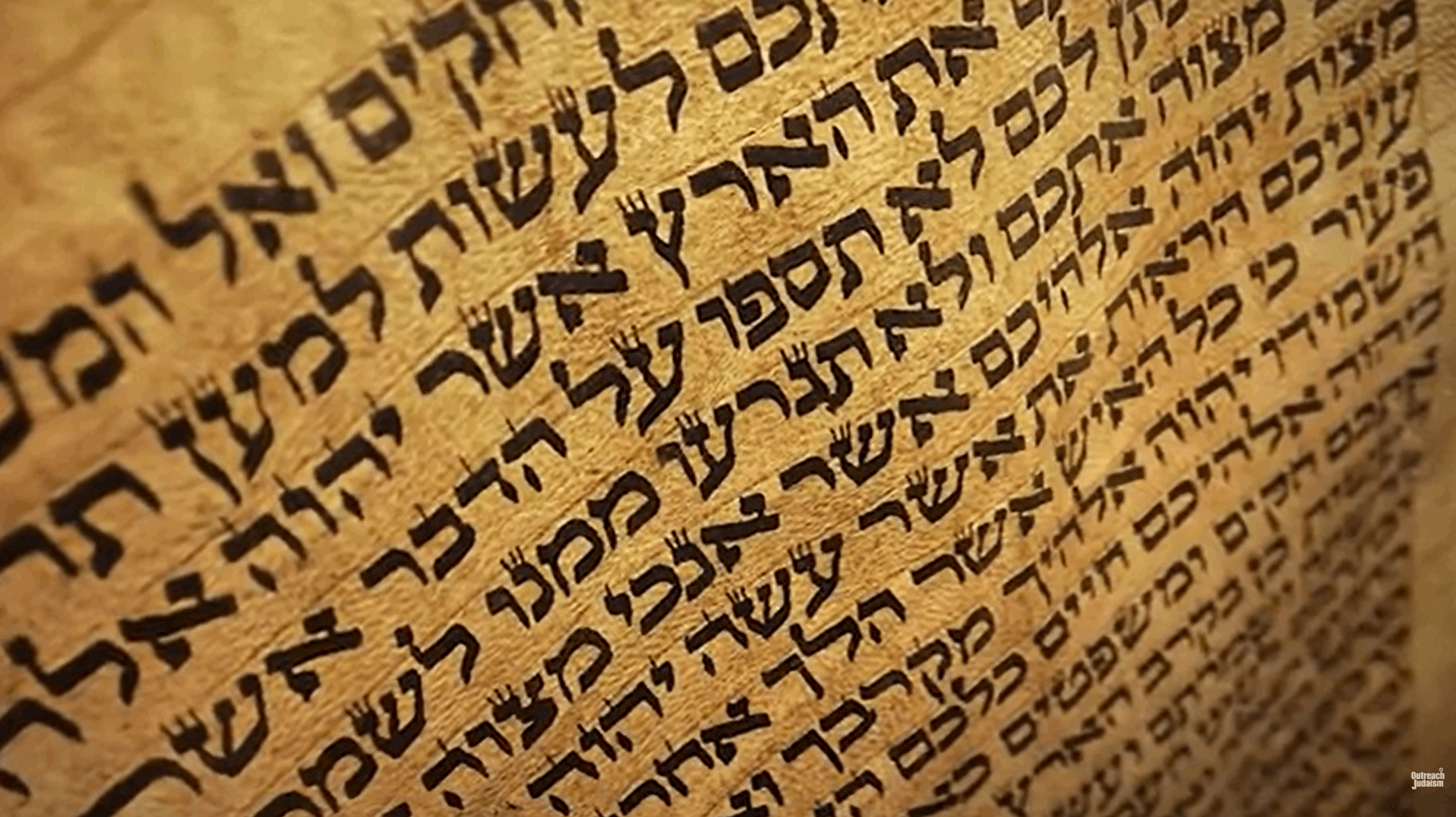
Today’s debate concerns the following verse, which « Christians » are said to have falsified with the word « pierced. » This false claim shall be exposed.
For dogs have surrounded me; a band of evil men has encircled me; they have pierced my hands and my feet. (Psalms 22:17)
What is the debate about?
The presenter of the video first frames the debate as follows:
Regarding Psalm 22:16 (17), either Christians or Jews are lying or mistranslating this verse.
But immediately, he narrows down the debate more precisely, and human error in translation is now ruled out:
This text says either that they pierced my hands and feet, or that they are like lions at my hands and feet. I am simply trying to determine who is telling the truth and who is lying.
So, according to Mr. Singer, the debate is purely binary: it is a matter of confronting and denouncing the lie (of the Christians) and displaying the truth (of the Jews). We will take up the fallacy of this debate.
Other Jews (Messianic Jews: ONE for Israel) have addressed this same controversial subject in a very enriching study of Psalm 22. They do not place undue emphasis on the study of the controversial word [pierced], but respond to it with their knowledge of the Old and New Testaments in a more comprehensive, profound, and sensitive manner, without calling anyone a liar. Their analysis is consistent, sound, and confirmed by the discoveries of ancient manuscripts. ONE for Israel has also answered politely and according to the scriptures erroneous claims (1) (2) of Mr. Singer.
The oldest hebrew manuscript
The oldest fragment of the Hebrew manuscript of Psalm 22 on the planet is the Dead Sea Scroll (4Q88), and the words that appear in it are « pierced, my hands and my feet. » The difference between these two versions lies in one letter, a yod for « like a lion » and a vav for « pierced. » These two letters are similar but differ in length.
Some jewish scholars conclude that the term here is indeed « pierced » and not « like lions, » based on manuscripts dating from before our era. Tactfully, the messianic jews do not accuse the Masoretic copyists of « lying » or of deliberate falsification, nor do they draw a black and white conclusion about the nature of the copyist’s discrepancies in the Masoretic text, which no one could prove.
Jewish or Christian Bible?
Mr. Singer states:
In a Jewish Bible, this appears in Psalm 22, verse 17, while in a Christian Bible, the same verse appears in Psalm 22, verse 16. « Christian » Bible, the same verse will appear in Psalm 22, verse 16.
Is the Old Testament of a Jewish Bible different? It is true that « Christian » editions of the Bible most often mention the term « pierced, » but not exhaustively.
The online translation by the Rabbinate, at https://www.sefarim.fr/, states:
For dogs have surrounded me; the band of evil men has encircled me; like a lion [they have wounded] my hands and my feet.
כִּי סְבָבוּנִי, כְּלָבִים: עֲדַת מְרֵעִים, הִקִּיפוּנִי; כָּאֲרִי, יָדַי וְרַגְלָי.
The expression, Jewish Bible or Christian Bible does not exist in either the Old Testament or the New Testament. The Old Testament and also the New Testament were written by Jews, although Moses was never called a Jew (= Judean) … and the author by inspiration was God Himself.
It was he who, during the assembly in the desert, being with the angel who spoke to him on Mount Sinai and with our fathers, received living oracles to give to us. Acts 7:38
What advantage, then, is there in being a Jew, or what value is there in circumcision? Much in every way! First of all, the Jews were entrusted with the very words of God. Romans 3:1-2
Tovia Singer claims that Christians have distorted and even violated the Bible, but this is not a problem of translation, nor of gross lies on the part of the translators, but rather a choice of manuscripts. The Masoretic text, dating from around 10 centuries AD, says « like a lion to my hands and feet, » but most ancient Middle Eastern translations clearly say « pierced, » not « like a lion. » Here are a few examples:
The Syriac translation:
The Peshitta, a Syriac translation of the Old Testament, was made from the Hebrew text in the 2nd century AD, while some books not included in the Hebrew canon may have been translated at a later date from a Greek text.
Syriac is a dialect of Aramaic that emerged in Edessa (now Urfa, in southeastern Turkey) in the 1st century CE. The general consensus among Peshitta scholars is that the Old Testament was translated into Syriac, largely from Hebrew with some additions from the Septuagint and the Targums, by Jews (at least the Torah, Chronicles, and Proverbs) and Judeo-Christians familiar with Jewish exegetical traditions, no later than the 2nd century CE, and that the New Testament was translated from Koine Greek, probably in the early 5th century (info Wikipedia).
The Septuagint or LXX:
Modern researchers believe that the Septuagint was written between the 3rd and 1st centuries BC, at a time when « Christians » did not exist.
Mr. Singer despises this translation and puts it on the same level as the Vulgate (a Western translation from the 4th century), even though the Septuagint was used by Jews from the beginning and dates back to before the Common Era.
These two translations are completely different. The Septuagint was certainly translated by Jews and could not have been influenced by Christians.
According to the website the-thorah.com, … the Masoretic Bible is late.
The oldest source of the Masoretic Bible is the Aleppo Codex (Keter Aram Tzova ), dating from around 925. Although it is the text closest to the Masoretic school of Ben Asher, it has come down to us in an incomplete form, as almost the entire Torah is missing. The oldest complete source of the Masoretic Bible is the Leningrad Codex B 19 A (codex L), dating from 1009.
Hebrew ancient manuscripts
Mr. Singer is certainly aware that if the Septuagint uses the term « pierced, » it is because ancient Hebrew manuscripts also used the term dug/pierced … and this has been confirmed by at least two ancient manuscripts:
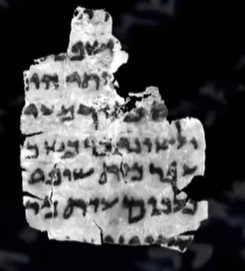
- the 4Q88 (Psalms 22: 14-17) from Qumran, dated to the first century BC, discovered in 1952. This reading was not analyzed until around 1997, and was published in 1999 in The Dead Sea Scrolls Bible. It clearly reads « pierced. »
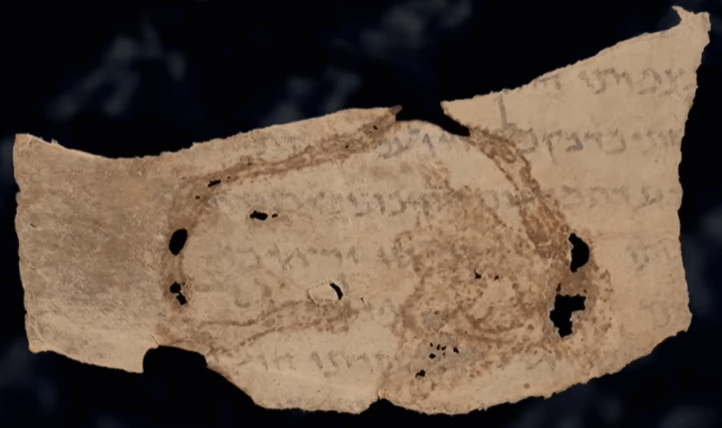
See the English translation of the Dead Sea Scrolls online: Dead Sea Scrolls Bible Translations - Another fragment of the Dead Sea Scrolls discovered in a cache of manuscripts at Naḥal Ḥever in Israel in the early 1950s. It dates from after the destruction of the temple in the first century. Fragment 5/6 Ḥev–Sev4Ps 11 of Psalm 22 contains the crucial word in the form of a third-person plural verb, written וראכ (« pierced »).
It is true that the Hebrew term « pierced » is unusual for expressing pierced, but it remains that it is not the later term « like a lion. »
Mr. Singer persists in seeing naivety and dishonesty in “brainwashed” Christians who, according to him, often translate the Hebrew term correctly as “lion” in places, except exceptionally in Psalm 22, and this without justification.
How audacious!
But we can turn the questions back on Mr. Singer and his acolyte:

- Why not mention the ancient date of the Greek translation of the Septuagint or the Syriac?
- Why not mention the very late date of the last available Masoretic Hebrew text he refers to?
- Why not mention the reading of « dug/pierced » on the two ancient Hebrew fragments Ḥev–Sev4Ps and 4Q88?
- Why treat as liars those Jews or Gentiles who, on the contrary, are not frightened by the history and science of the manuscripts?
Knowledge of the text
Finally, and this will not be the subject of this article, many real academic jewish scholars regard the entire Psalm 22 as fulfilled in Yeshua through the crucifixion, not only the verse about being « pierced, » but also what precedes and follows it, for example, the lesser-known verse 23, which is quoted in the NT: Hebrews 2:12.
… I will declare your name to my brothers; I will praise you in the congregation.
Conclusion
Without considering the defamatory aspect of his claims regarding other jewish faith groups, we will underline that :
- The analysis of this Psalm 22 by Mr. Singer is superficial.
- He willingly ignores well-known, multiple findings on the Dead Sea Scrolls, dismantling his claims.
- His interpretations of hebrew Scriptures in light of other analyses by Jewish and non-Jewish scholars appear biased, inaccurate, and totally lacking in academic rigor.